
Skullburn
24 HIT Riga SIAAction
4.6521.00 Reviews
- Version
- 1.0.5
- Installs
- 500.00K
- Age Rating
- Everyone 10+
Screenshots

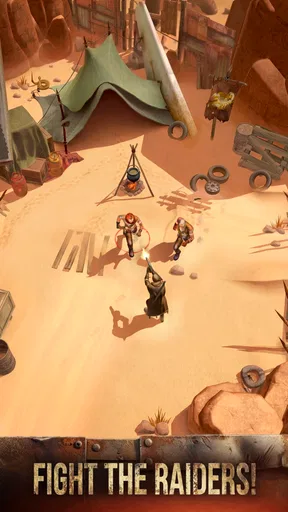
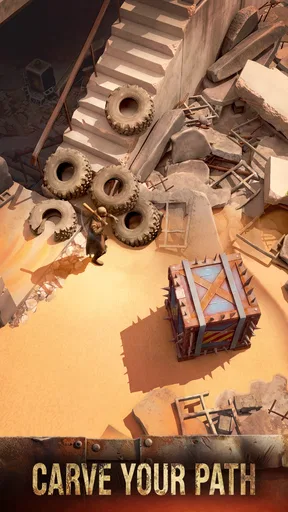
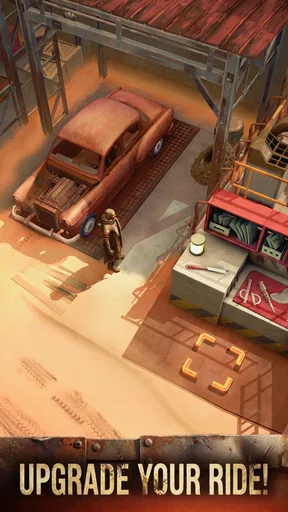
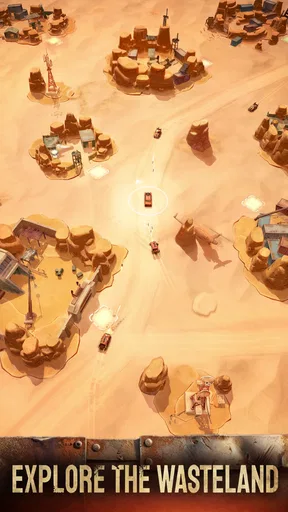
Our Review of Skullburn
 Analysis by Appyee
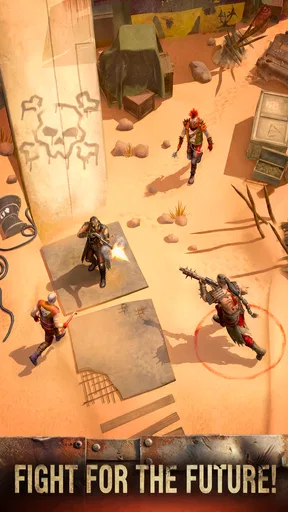
The first thing I noticed about Skullburn is how directly it sets its mood. This is an action game built around a scorched wasteland, and its fire-ravaged setting gives every early decision a sense of urgency. I went in expecting a quick, aggressive experience rather than a slow strategy title, and that expectation helped me enjoy it more. The game does not try to disguise its identity: it wants to put pressure on the player and make survival feel like an active task.
That focus makes it easy to understand who may enjoy it. If you like action games where the next objective is always close at hand, Skullburn has an appealing rhythm. If you prefer long conversations, elaborate world-building, or carefully planned turns, this is probably not the right place to start. My impression is that its strongest quality is its concentration. It keeps attention on movement, danger, and the satisfaction of getting a little farther than before.
How Skullburn turns a wasteland into a playable challenge
I find the wasteland premise most useful when I treat it as a prompt to make deliberate choices, not as a reason to rush. This section looks at how early goals, visible improvement, and the challenge’s pace shape that loop, then considers how to keep a session focused without letting repeated attempts become tiring.
Early goals give the opening a clear purpose
The opening hours matter a lot in a game like this because the setting alone cannot carry the experience. A ruined world can look interesting, but I need a reason to keep moving through it. Skullburn works best when I treat each early objective as a practical test: survive the immediate threat, understand what the game expects from me, and learn which decisions waste time or create an opening.
I would not approach the beginning as a place to rush blindly. The better habit is to use the first encounters to establish a personal routine. I pay attention to how quickly danger develops, how much room I have to react, and whether a risky move is actually helping me progress. That sounds simple, but it is useful because action games often punish players who confuse constant movement with smart movement. In Skullburn, the early stage is most enjoyable when I am learning the game’s priorities rather than merely trying to move as fast as possible.
This also gives the game a more convincing sense of momentum. The wasteland is not just a background for combat; it becomes a reason to keep making decisions. Every stretch of progress feels tied to the larger question of whether I can maintain control in an environment that is already hostile. I like that framing because it makes small victories feel relevant without requiring a complicated story explanation.
One practical tip is to resist spending every useful opportunity as soon as it appears. When a game is built around pressure, it is tempting to use the first available advantage immediately. I found it more satisfying to pause for a moment and ask whether the current situation truly demands it. Saving a response for a more dangerous moment can be more valuable than chasing a quick improvement. That approach also makes the action feel less random, because I am making choices instead of reacting to every visual cue.
Progress signals matter more than raw speed
Skullburn’s appeal depends on whether progress feels visible. I do not need a huge collection of menus to feel that I am advancing, but I do need some sense that my attempts are teaching me something. The most useful signal is the change in my own performance. A section that once felt chaotic becomes readable after I recognize its rhythm, and that personal improvement is a meaningful reward.
This is where the game can suit players who enjoy repeating a challenge with a better plan. The objective is not only to reach the next point; it is to understand why the previous attempt failed. Was I too aggressive? Did I ignore a safer route? Did I spend attention on the wrong threat? Asking those questions turns a defeat into information. I prefer that kind of progress to a system that simply hands out rewards while my play remains unchanged.
There is also a useful distinction between progress and completion. A player may not finish a difficult sequence, but still come away with better timing and a clearer idea of what to do next. That makes short sessions worthwhile. I can play for a limited period, stop after a failed attempt, and still feel that the next run will be different because I have learned something concrete.
For everyday use, this makes the game a reasonable choice for a commute, a waiting room, or a short break. I would not describe it as a relaxing background game, because the action demands attention, but it can fit into a small window when I want something more engaging than passive scrolling. The key is to begin a session with a modest goal, such as understanding one difficult encounter, rather than expecting to clear a large amount of content every time.
The difficulty curve rewards attention, not impatience
The strongest action games teach their rules before demanding mastery, and that is the standard I use when judging Skullburn. Its difficulty is most satisfying when a failure feels connected to a decision I could improve. I can accept losing because I mistimed an action or misread a threat. I become frustrated when success appears to depend on information the game has not taught me.
My advice is to treat the difficulty curve as a conversation. The game presents pressure, and I answer by changing my approach. If I keep repeating the same move and hope the result changes, the experience becomes tiring. If I adjust one variable at a time, the challenge becomes easier to understand. I might alter my pace, pay attention to a different danger, or stop committing to an attack before I know the situation is safe.
This method is especially important for players who normally expect action games to reward speed above everything else. Skullburn’s wasteland theme may encourage a frantic style, but frantic play is not automatically effective. Sometimes the best improvement comes from slowing down long enough to recognize the pattern of a threat. That is a useful trade-off: the game can feel intense, yet the answer is not always to move faster.
I also think the difficulty will divide its audience. Players who enjoy practicing a demanding sequence may find the pressure motivating. Players who want a steady power fantasy, where upgrades quickly remove earlier problems, may find the same design less comfortable. The game is more appealing when I see challenge as part of the attraction rather than an obstacle placed between me and the “real” content.
Unlocks and goals need to support the moment-to-moment action
Progression in an action game has to serve two purposes. It should give me a reason to continue, but it should also improve the way I interact with danger. I am less interested in unlocking something merely because a bar filled than in gaining a tool or advantage that changes how I approach the next situation. That is the lens through which I view Skullburn’s long-term appeal.
The most effective goals are the ones I can connect to a specific problem. If I am struggling to survive a certain type of encounter, a meaningful improvement should help me rethink that encounter rather than simply make the numbers larger. This creates a more interesting decision: do I keep pushing toward the next reward, or do I replay earlier challenges to become more consistent first?
I recommend keeping personal notes about what caused a failed attempt, especially if I am playing in short bursts. A quick reminder such as “wait before committing” or “watch the second threat” can make the next session more productive. It is a small habit, but it prevents repeated mistakes from blending together. In a game built around action and pressure, remembering the lesson from a previous run can be as important as any visible reward.
Another useful approach is to separate progress goals from completion goals. A completion goal might be reaching the next stage, while a progress goal could be surviving a difficult sequence without panic. The second goal is often more realistic and keeps the game enjoyable when a full clear is still out of reach. I found that this mindset protects the experience from becoming a simple cycle of failure and irritation.
Retention pressure can be exciting, but it should not become exhausting
Skullburn has a natural reason to pull me back: the wasteland feels dangerous, and the action invites another attempt. That is healthy retention when I return because I understand the challenge better and want to test myself. It becomes less appealing when I feel pushed to continue without a clear purpose.
The difference is pacing. A strong session should have a beginning, a focused middle, and a natural stopping point. I prefer to end after a meaningful improvement rather than play until frustration takes over. This is particularly useful for a game whose atmosphere is built around fire and ruin; constant intensity can lose its impact if I never give myself a chance to reset.
Players should also consider the free-to-play context. Skullburn is free to download, while optional purchases range from less than a dollar to nearly a hundred dollars per item. That wide range makes it important to decide in advance whether spending is part of your plan. I would start without buying anything, learn whether the core action suits me, and only then consider whether an optional purchase genuinely improves my experience. A purchase should solve a problem I understand, not a frustration created by impatience.
For families, the age guidance places the game at Everyone 10+. That makes it more approachable than a title aimed at adults only, but I would still consider the child’s tolerance for tense action and repeated failure. An age label does not tell me whether a particular player will enjoy pressure. A younger player who likes practicing difficult challenges may be comfortable, while someone looking for a calm game may not be.
Where it fits among action alternatives
Compared with a slower adventure game, Skullburn is more focused on immediate danger and repeated decision-making. I would choose it when I want the game to get to the point quickly. A larger adventure may offer more exploration, dialogue, or a broader world to study, but it can also require a bigger time commitment. Skullburn is easier to approach when I only want a concentrated action session.
Compared with a casual action game designed mainly for quick rewards, it asks more from my attention. The wasteland setting and pressure give the action a sharper edge, but that also means it is less suitable as a game I play absent-mindedly. If I want something to occupy my hands while I watch something else, I would choose a simpler alternative. If I want to focus on improving through repeated attempts, Skullburn is the better fit.
It also differs from a traditional strategy game because its lessons are felt through timing and reaction rather than long-term planning alone. I cannot rely entirely on preparing a perfect setup before the action begins. The game’s value comes from how I respond when the situation changes. That makes it more immediate, but it may disappoint players who prefer to solve problems at their own pace.
Performance expectations and practical setup
Skullburn supports devices running Android 7.0 or later, which gives it a broad compatibility range for Android users. The current version is 1.0.5, and the game has already passed half a million installs. Its average rating is 4.6 from around eighteen thousand ratings, while the review count is in the hundreds. Those figures suggest that the game has attracted a substantial audience, although they should not replace checking whether its demanding action style matches my preferences.
The developer is 24 HIT Riga SIA, and the game was released on March 19, 2026. I mention the release timing because an early version of an action game can feel different as players learn its systems and the developer continues refining the experience. I would keep the installed version current, especially when a game relies on precise interactions where small improvements can affect comfort and consistency.
Before installing, I would also make sure the device has enough free space and that I am comfortable playing with sustained attention. Those are ordinary preparations, but they matter more here than they would for a passive puzzle. A cramped session, poor concentration, or repeated interruptions can make the difficulty feel harsher than it really is.
Who should play it, and who should skip it
I would recommend Skullburn to players who enjoy action games with a hostile setting, clear short-term goals, and a reason to repeat difficult moments. It is a good match for someone who likes turning a failed attempt into a better plan. The game is also suitable for players who want a free starting point before deciding whether they are willing to spend on optional items.
I would skip it if I want a gentle game that can be played without concentration. I would also look elsewhere if my priority is a deep narrative, a peaceful exploration experience, or a progression system that constantly makes the player stronger. Skullburn’s appeal comes from pressure and personal improvement, so those expectations could clash with what it is trying to do.
One less obvious audience is the player who enjoys structured practice but does not have time for long sessions. A short attempt can still have value if I enter with a specific target and stop once I have learned something. That makes the game more manageable than its intense atmosphere might suggest. The opposite is true for anyone who dislikes restarting: repeated attempts are part of the experience, not an occasional inconvenience.
My progression verdict
After spending time with Skullburn, I see its progression as most convincing when it is tied to learning. The game’s goals work when they give me a reason to face the wasteland again, its progress signals work when they show that my decisions are improving, and its difficulty works when failure points toward a practical adjustment. That combination creates a stronger reason to continue than simple accumulation alone.
Its main limitation is equally clear: the pressure will not suit everyone. Players who need a relaxed pace or a highly story-driven reason to move forward may find the experience narrow. The free-to-play structure also deserves a measured approach because the optional item prices range from $0.99 to $99.99. I would not let the presence of purchases decide my opinion before trying the core game, but I would set a spending limit before getting invested.
My final recommendation is cautious but positive. Skullburn is worth trying if you want focused wasteland action and enjoy earning progress through better play. I would begin with short sessions, use early attempts to learn rather than chase instant success, and judge the game by whether each failure teaches me something. For the right player, that loop can be satisfying. For anyone seeking comfort, extensive storytelling, or effortless advancement, another type of action game will likely be a better choice.
Verdict
Strengths of Skullburn
- Fast-paced combat keeps matches exciting and easy to replay.
- Distinct characters offer varied playstyles and tactical options.
- Short rounds suit quick gaming sessions on mobile devices.
- Stylized visuals give the game a memorable dark atmosphere.
- Competitive gameplay rewards timing, movement, and strategic decisions.
Limitations of Skullburn
- Progression may feel repetitive after extended play sessions.
- Some features or content may require in-app purchases.
- Online matches can be affected by connection quality.
- The dark visual style may reduce clarity on smaller screens.
- New players may need time to learn each character’s strengths.
Other Releases by 24 HIT Riga SIA
View All


Similar Picks in This Category
View All
Temple Run 2: Endless Escape
Imangi Studios4.1

PUBG MOBILE
Level Infinite4.3

Free Fire: 9th Anniversary
GARENA INTERNATIONAL I4.4

Talking Tom: Hero Dash Run
Outfit7 Limited4.3

slither.io
Lowtech Studios3.9

Sniper 3D:Gun Shooting Games
Wildlife Studios4.6
Frequently Asked Questions
What is Skullburn, and what kind of game is it?
Skullburn is a fast-paced action game centered on intense combat, dangerous enemies, and a dark skull-themed atmosphere. Its appeal comes from short, energetic sessions that encourage players to keep moving, attack at the right moment, and improve their performance over time. Before downloading, keep in mind that the game is designed for users who enjoy challenging arcade-style gameplay rather than a slow, story-heavy experience.
Is Skullburn free to download and play?
Skullburn can generally be downloaded without an upfront purchase, but the exact monetization options may depend on the Android or iOS version available in your region. Players should check the store listing for possible advertisements, optional in-app purchases, or premium upgrades. These purchases may improve convenience or unlock content, although the core experience should be evaluated before spending money.
Can Skullburn be played offline?
Some parts of Skullburn may work without a continuous internet connection, which is useful when playing during travel or in areas with limited service. However, online access may still be required for downloading updates, displaying advertisements, synchronizing progress, or using connected features. For the most reliable experience, launch the game once while connected and review its permissions and store description.
Is Skullburn suitable for children?
Skullburn’s dark visual style, skull imagery, combat, and potentially intense action may not be suitable for very young children. Parents should check the official age rating and review the game’s content before allowing a child to install it. It is also worth checking whether the app includes advertising, optional purchases, or features that could require supervision during play.
What devices are compatible with Skullburn?
Compatibility depends on the version published for your device and the operating system requirements listed on Google Play or the Apple App Store. Before downloading Skullburn, confirm that your phone or tablet has a supported Android or iOS version, enough free storage, and updated system software. Older devices may install the game but provide slower loading, reduced performance, or occasional instability.
Play our best games!


